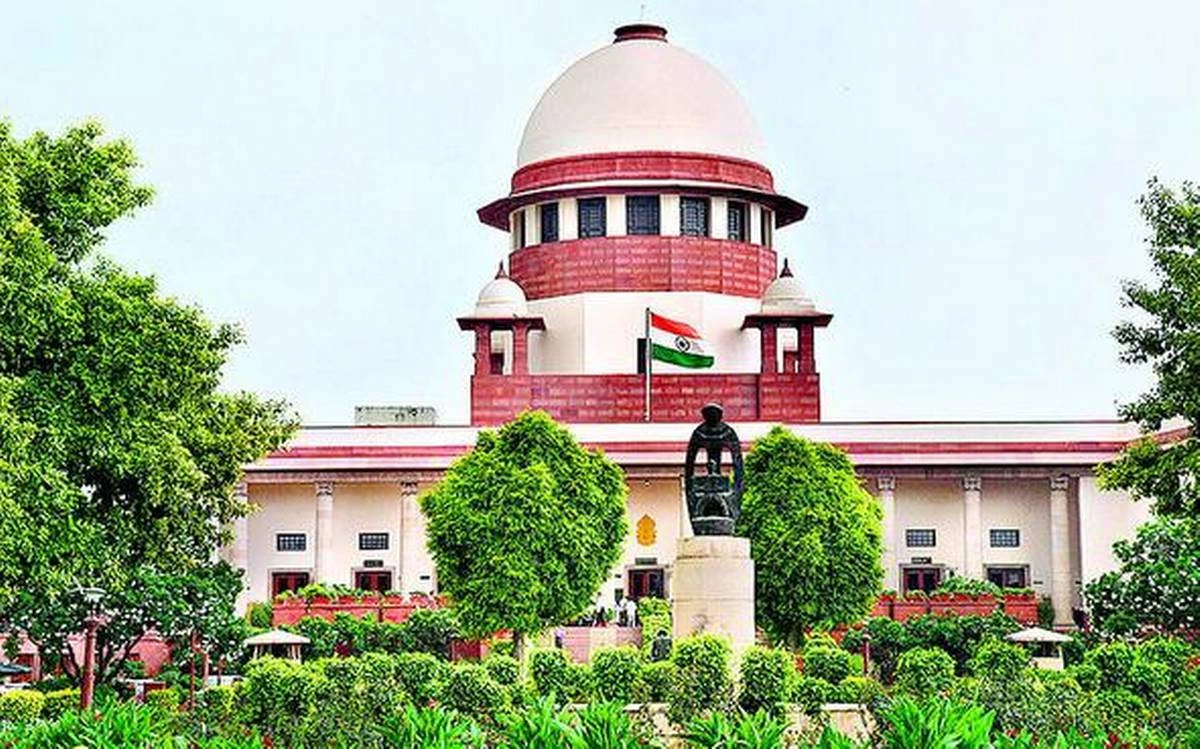
The Supreme Court will begin hearing on Tuesday, November 11, the petitions filed by several political parties against the Election Commission’s decision to carry out a pan-India Special Intensive Revision (SIR) of electoral rolls.
The petitions have been filed by the DMK, West Bengal Congress, Trinamool Congress (TMC) MP Dola Sen, and other leaders across states. These parties have questioned the legality of the Election Commission of India’s (ECI) decision, calling it “arbitrary and unconstitutional.”
A bench of Justices Surya Kant and Joymalya Bagchi clarified that they are currently hearing only the Bihar-related SIR case. Any new petitions from other states must first be mentioned before Chief Justice of India (CJI) BR Gavai for allocation. The bench added that it is up to the CJI to decide whether these new cases will also be handled by them.
The DMK has specifically challenged the SIR exercise in Tamil Nadu, while the CPI(M) has questioned the constitutional validity of the directive. Meanwhile, the AIADMK has supported the Election Commission’s move, saying it is “legitimate and necessary” to prevent voter fraud and ensure fair elections.
Earlier, on October 16, the EC had defended its Bihar SIR before the court, stating that the process was accurate and that the complaints against it were baseless. It denied allegations that large numbers of Muslim voters were excluded from the revised rolls, saying no formal appeal had been filed against deletions.
On October 27, the Election Commission announced the second phase of the SIR in 12 states and Union Territories, including West Bengal, Tamil Nadu, Kerala, and Uttar Pradesh. The exercise began on November 4 and will continue till December 4. The draft electoral rolls will be released on December 9, while the final lists will be published on February 7, 2026.
The outcome of the Supreme Court hearing is expected to have a major impact on the voter list revision process across the country, especially in states headed for elections in 2026.